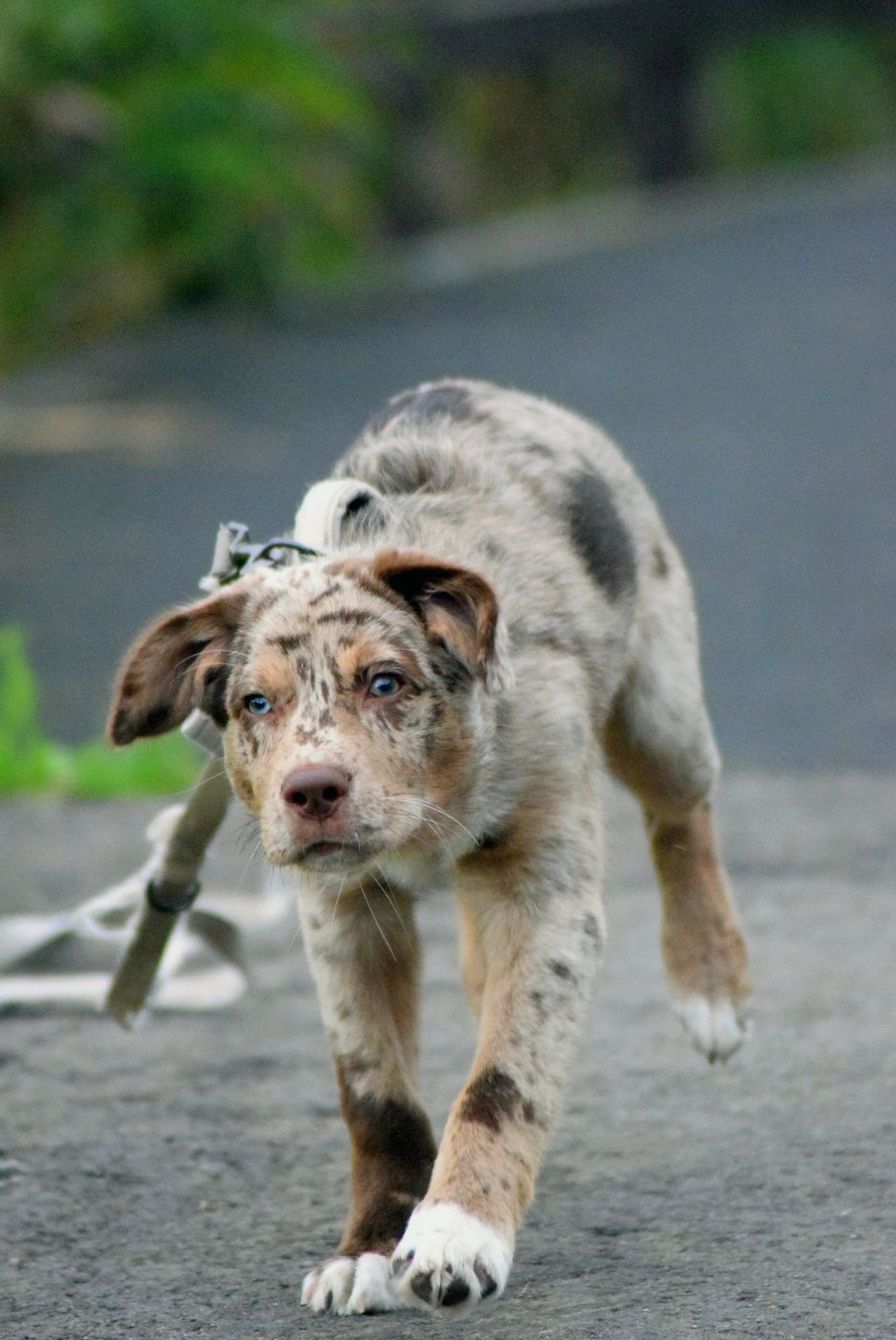
Decks, stairs and a slow introduction to the sand.
- County
- Brunswick County
- From downtown Wilmington
- 28 mi southwest
- Main roads
- NC 130 and the Holden Beach Bridge
- Where dogs walk
- quiet island streets and the beach outside restricted hours (check posted rules)
Holden Beach is a barrier island town in Brunswick County, reached over a bridge from NC 130. A regional tourism guide says dogs are banned from the beach from May 20 to September 10, between 9 a.m. and 5 p.m., and must be leashed on the island at all times. Rules can change, so check the town's current page and signs before you go. Early morning and evening are the likeliest times for a puppy to enjoy the sand. Early mornings are cooler, and fewer people means fewer surprises for a sensitive puppy.
Most homes here sit up on pilings with long stairs and open decks. Many puppies find open-backed steps scary or slippery, and a fall can hurt a small dog. Carry a young puppy up and down, and teach stairs slowly on a low, solid set indoors. Block deck rails with a pen, and never leave your puppy unsupervised on a raised deck. Decks and gaps in boards are also a risk for tiny paws. Teach your puppy to sit before stepping onto the deck, and block off the stairs with a sturdy gate when you are busy.
For a first sand visit, go early, when it is cool, and choose a quiet stretch. Let your puppy stand on the sand and sniff before moving. Offer treats for calm steps, and let it approach the water at its own pace, never forcing it. Keep a short leash, skip rough surf and carry fresh water. Ask your vet when your puppy is ready for beach outings, and rinse salt from the coat afterward. Pack extra water, a towel and a small bag of treats so every visit ends on a good note.
Summer sun is strong, and sand reflects heat from below. Test the surface with the back of your hand, watch for panting and rest in shade. Sea turtles nest through the warm months, so follow signs and stay away from marked areas. For storms, practice crate naps and quiet car rides. Leaving the island means crossing the bridge, and a puppy that rides calmly makes that trip safer. A puppy that rests in a crate during the drive is far more comfortable when you finally reach the island.
Gentle beach-town outings for a puppy
- Early-morning sand sniffVisit outside the banned hours, with your puppy on a short leash. Let it stand and sniff before walking. Keep it short, offer water and leave while your puppy still wants more.
- Deck-side watchingSit on a low deck or porch with treats and watch the island go by. Pair bikes, golf carts and gulls with calm rewards, and make sure the rails and gaps are secure.
- Stair-step practicePractice on a short, solid flight at home or in a rental before tackling a tall staircase. Lure with a treat, praise each step and carry your puppy on the big flights.
- Evening island strollAs the heat fades, walk a quiet street on a short leash. Watch for hot pavement, fishing hooks and shells, and keep to the edge when cars pass.
- Bridge-ride rehearsalTake a few short drives in a secured crate so your puppy is relaxed by the time you cross the bridge. End each ride with a treat and a calm arrival.
Why a gentle start makes a happier beach dog
A puppy that has a good first beach day often grows into a dog who loves the sand. Training helps by building confidence in small steps: stand on the sand, take a treat, walk a few yards. With a loose leash and a reliable sit, you can enjoy the early hours without a tug-of-war. Calm greetings also keep other beach walkers happy. Early success builds confidence, and confident puppies cope better with whatever the coast throws at them.
Vacation homes bring their own challenges: stairs, new smells and unfamiliar beds. A crate or mat you bring from home gives your puppy a familiar place to settle. Practicing a wait at the door and a quiet car ride makes travel easier. Each puppy has its own pace, and a trainer can help you plan gentle steps. A few well-practiced routines make rental houses, bridges and crowded weekends easier on everyone.
Rough planning numbers. Each trainer sets a rate, and rates vary by puppy and market.
Sand and Surf Introductions$75 to $150 per private lesson→Storm and Fireworks Comfort$75 to $150 per private lesson→Car and Boat Ride Manners$75 to $150 per private lesson→A softer way in.
- Choose one or two early jobs, like potty timing or a calm leash, and note where in Holden Beach they come up.
- When you call a trainer, ask whether they work in Holden Beach, where sessions are held and what the fee includes.
- Keep practice short and happy near quiet island streets and the beach outside restricted hours (check posted rules), and go home while your puppy still wants more.
Nearby communities. Also in this guide.
Local resources. Learn more about Holden Beach.
Ground rules
Cited facts, plain limits.
Published by K9PN. See the Disclaimer for the full wording.
Good questions
Before you begin.
When can a puppy go on the beach at Holden Beach?
A regional tourism guide says dogs are banned between 9 a.m. and 5 p.m. from May 20 to September 10 and must be leashed. Check the town's page, and ask your vet about timing.
How do I teach a puppy to use beach-house stairs?
Carry your puppy at first, then practice on a low, solid set of steps with treats. Use gates at the top and bottom of open stairs.
Is salt water safe for a puppy to drink?
Salt water can upset a stomach, so bring fresh water and offer it often. Ask your vet if your puppy drinks seawater.
How much does puppy training cost near Holden Beach?
General estimates are about $150 to $350 for a lesson package and $75 to $150 for a private lesson. Travel costs may apply.